
Let’s be honest for a second. You didn’t go through the hassle of flying to Belize, dealing with international travel, hopping on a small puddle jumper from BZE or a bumpy ferry from Belize City, and hauling your heavy bags across the island just to be treated like another number on a list. You didn’t come all this way to be “processed.” Yet that’s exactly what happens on about 80% of the boats heading out to the barrier reef every single morning. Group tours are the “default” for a reason—they’re easy to book at any hotel desk, they’re affordable, and they follow a predictable, assembly-line routine. But there’s a massive difference between simply seeing the reef and actually experiencing it.
If you’re anything like me, the idea of being stuck on a cramped boat with twenty strangers—three of whom are shouting, two are hungover, and five haven’t a clue how to clear a snorkel—sounds less like a vacation and more like a chore. That’s the “Cattle Boat” effect. It’s a compromise. And after months of planning your vacation, why should you start your day with a compromise? A private Hol Chan snorkeling tour is often dismissed as a luxury meant only for the wealthy, but that’s a total misconception that keeps many travelers from having the best day of their lives. Especially if you’re traveling with family, friends, or on a honeymoon, going private isn’t just a luxury—it’s the only way to truly experience the Hol Chan Marine Reserve.
The Chaos of the “Cattle Boats” — A Reality Check
If you stroll down the main beach in San Pedro, Ambergris Caye, around 8:45 AM, you’ll witness the madness of the “cattle boats” loading up. It’s a frantic mess of neon life jackets, fins tossed in piles, and harried guides trying to check names off soggy clipboards. These boats are designed for maximum volume and minimum turnaround time. They’re the fast-food joints of the sea. They need to hit the reserve, stop at the standard two spots, and get back to dock in time to load up for the afternoon shift.
On these boats, there’s no room for spontaneity. If you happen to spot a hawksbill turtle gliding gracefully through the coral or an octopus changing colors on a rock and want to watch for a few minutes? Forget it. The guide’s whistle will blow in five minutes because the schedule demands that the boat moves on. You’re just another tourist on a conveyor belt. The noise, the splashing of twenty people, and the constant risk of getting smacked by a stray fin—this is the hidden cost of a cheap tour.

But on a private Hol Chan tour, that industrial pressure simply disappears. The reef becomes your private theater. You spot a section of coral teeming with juvenile fish and you want to hover there until your fingers prune? Stay as long as you like. If you pull up to a popular spot and four other boats are already crowding it, your captain can pivot. You leave, find a quieter spot, and return when the crowds clear. That flexibility is what turns a Belize snorkeling trip into something extraordinary. You’re not tied to the lowest common denominator of group swimming abilities. You move at your own pace—whether faster and more athletic or slower and more focused—something no group could ever do.
The Math of Privacy — Luxury or Logic?
This is where most people get it wrong. They see a $450 or $500 USD price tag for a private boat charter and immediately compare it to the $65 or $75 price for a spot on a group tour. Let’s break it down. If you’re a family of four, you’re already paying $260 to $300 for the group experience. For an additional $150—which, let’s face it, is less than one decent dinner with drinks in San Pedro—you upgrade your entire day. You get extra time, personalized attention from a naturalist guide, and the comfort of a boat where you actually have space to breathe.
When you factor in your time, the math becomes even clearer. Group tours spend a huge chunk of the morning doing the “dock hop.” You’ll spend forty-five minutes on the boat, picking up strangers who haven’t finished their coffee yet. A private boat picks you up at the time you choose and goes straight to the reef. That’s an extra hour of vacation you’re not wasting waiting for someone to find their misplaced flip-flops. Check out our checklist for what to bring to prep for the streamlined experience.
Weather and wind
Table: Group vs. Private — The Core Differences
| Feature | Group Tour (“Cattle Boat”) | Private Boat Charter |
|---|---|---|
| Departure Time | Strict (Usually 9:00 AM) | Flexible (8:00 AM recommended) |
| Itinerary | Fixed (Zone A and Zone D only) | Customizable (Zones A, B, C, D) |
| Guide Interaction | Supervisory / Lifeguard style | Educational / Naturalist style |
| Crowd Control | You are the crowd | You avoid the crowd |
| Boat Space | Shoulder to shoulder | Full deck to yourself |
When you break it down, the “luxury” of a private boat is actually just a smart, logical choice. It’s like deciding between a cramped city bus and a private car. Both will get you there, but only one lets you enjoy the ride. Hol Chan deserves more than the “discount” treatment.
Customizing Your Itinerary Beyond the Basics
Most tours hit Zone A (the Cut) and Zone D (Shark Ray Alley). These spots are great, but Hol Chan Marine Reserve is way bigger and more diverse than just these two famous places. The reserve is divided into four zones, each with its own unique ecosystem. On a private Hol Chan snorkeling experience, you’re not limited to the “greatest hits.” You can ask your captain to explore quieter corners of the reserve where the magic truly happens.
Private charters let you spend more time in the seagrass beds of Zone B or the mangrove channels of Zone C. This is where you might find manatees or southern stingrays that haven’t been scared off by fifty splashing tourists. It’s about diving deeper, not just ticking boxes.
The Four Pillars: Understanding the Zones of Hol Chan
To appreciate what you’re seeing through your mask, it helps to know the layout of the reserve. A private guide will explain these zones to you as you cruise over them, but here’s what each one offers for a customized trip.
| Zone | Name / Type | What You’ll See (Private Perspective) | Why Go Private Here? |
|---|---|---|---|
| Zone A | The Hol Chan Cut | Massive coral formations, groupers, moray eels | Can visit “Backside” of the reef where crowds don’t go |
| Zone B | Seagrass Beds | Sea turtles, conch, elusive manatees | Requires patience and silence to spot manatees—impossible in groups |
| Zone C | Mangroves | Juvenile fish, seahorses, unique root ecosystems | Best for slow-paced exploration and photography |
| Zone D | Shark Ray Alley | Nurse sharks, southern stingrays | Can avoid crowds by waiting for the “gap” between big tour boats |
Zone A: The “Cut” and the Hidden Caverns
Zone A is the heart of the reserve—a natural break in the reef where the water depth plunges from 5 feet to over 30 feet. The coral growth here is stunning. On a group tour, you’ll follow the crowd through the main channel. On a private tour, your captain can take you to specific spots where the coral is so shallow you need to watch your breathing, just to show you rare anemones or secret caverns where the big groupers sleep.
That kind of detailed attention doesn’t happen on group tours. Your private guide will point out the “small stuff”—the nudibranchs, tiny peppermint shrimp, and perfectly camouflaged octopus—things most people swim right over.
Zone B & C: The Manatee Quest
Zones B and C are often skipped by “express” tours, which is a tragedy. Zone B’s seagrass beds are home to sea turtles and, if you’re lucky, manatees. Manatees are shy, and they’ll flee from engines or loud splashing. On a private boat, the captain can turn off the engine early, letting you drift silently into the zone. That silence is the key to spotting manatees. In a group, they’re long gone before you even get in the water.

Zone C consists of mangroves—the nursery of the ocean. The roots of the mangrove trees provide shelter for juvenile fish, making it one of the most fascinating spots for underwater photography. It’s peaceful, shallow, and stunningly beautiful. It’s also where you’ll find seahorses clinging to the roots—a sight that requires patience and focus, which only a private tour can provide.
Chapter 4: The Flexibility of “Spontaneous Discovery”
The best moments on the reef are never planned. Maybe it’s a spotted eagle ray leaping out of the water near the boat, or a pod of dolphins cruising through the lagoon. On a standard tour, these are just brief distractions. On a private tour, they become the stop. If your captain spots something interesting, they can stop the boat, let you jump in, and follow the action. This flexibility is what turns a tour into a memory.
I’ve had days where we spent forty minutes just following a sea turtle as it grazed on seagrass. That’s the luxury of time—observing life instead of just checking off your list. For more info on marine life, our guide on Hol Chan’s inhabitants dives into the reef’s amazing ecosystem.
Logistics — San Pedro vs. Caye Caulker Private Trips
Depending on where you’re staying, the logistics of your private Hol Chan snorkeling tour can vary quite a bit. The two main departure points for accessing the reserve are Ambergris Caye (San Pedro) and Caye Caulker. While both islands give you access to the same reef, the boat experience and the rhythm of your day will differ drastically depending on where you start.
San Pedro: The “Express” Advantage
San Pedro is much closer to the Hol Chan Marine Reserve. A private boat departing from here can have you in the water at the “Cut” in just 10 to 15 minutes. That’s a massive advantage if you want to beat the crowds. Being that close gives you the flexibility to run “split shifts” or quickly return to the dock if the weather takes a turn. It’s the perfect base for serious photographers or families with young kids who might not handle long boat rides well.
Caye Caulker: The Scenic Journey
Caye Caulker lies further south, so a private boat trip from there is more about enjoying the journey. You’ll cruise for about 30 to 45 minutes along the reef before reaching Hol Chan. But with a private tour, that travel time becomes part of the experience. You can ask your captain to weave through the mangroves in search of seahorses or even stop by the “Split” for a quick dip in the crystal-clear channel on your way back. A private tour from Caye Caulker feels like a full-day expedition rather than just a quick trip. Just make sure your captain’s boat has enough power so you aren’t wasting half your day just getting there. For more on the boat specifics, check out our guide on getting to Hol Chan.
Logistics Comparison by Departure Point
| Factor | Starting from San Pedro | Starting from Caye Caulker |
|---|---|---|
| Travel Time to Reef | 10 – 15 Minutes | 30 – 45 Minutes |
| Boat Type | Speedboats / Skiffs | Speedboats or larger sailing cats |
| “Beat the Crowd” Potential | Highest (Arrive by 8:10 AM) | Moderate (Arrive by 9:00 AM) |
| Scenic Value | Quick coastline views | Mangroves, “The Split”, and long reef views |
The 8:00 AM Departure — Why It’s Worth the Alarm
I always tell people the same thing: ask for an 8:00 AM departure. If your captain suggests 9:00 AM, insist on leaving earlier. Most group tours—the “cattle boats”—don’t actually get their passengers into the water until 9:30 or 10:00 AM. That ninety-minute window between 8:00 AM and 9:30 AM is pure gold when it comes to snorkeling the Belize Barrier Reef.
Why is the early start so important? Let’s break it down:
- Visibility: The water in the channel is usually clearest early in the morning before the mass of snorkeling groups arrive and stir up the silt and sand from the bottom with their fins.
- Wildlife Activity: Marine life is more active in the early morning. Nurse sharks and rays are often cruising around before the midday heat slows them down. It’s also your best shot at seeing turtles feeding in the seagrass before the sound of twenty boat engines drives them away.
- The Silence: There’s an almost spiritual silence to the reef in the early morning when it’s just you and your guide. You can hear the “crunching” of parrotfish eating coral and the soft sound of the waves breaking in the distance. Once the big boats arrive, that silence is gone—replaced by shouting, splashing, and constant whistles.
Choosing the Right Private Vessel
Not all private boats are created equal. When booking your private Hol Chan tour, don’t just ask about the price—ask about the boat. For groups of 2-4 people, a traditional Belizean skiff (“panga”) is fine—it’s fast, nimble, and great for shallow spots. But for larger families or those seeking more comfort, look for a boat with a “T-top” for shade, cushioned seating, and a sturdy ladder for getting back in after you swim.
Pro Tip: Ask if the boat has a “dry box” for your cameras and phones. Even on calm days, there’s spray. A dedicated dry box is a sign of a professional private operator who understands the needs of modern travelers.
Mastering Shark Ray Alley the Right Way
Let’s talk about Shark Ray Alley. It’s the absolute highlight of every Hol Chan Marine Reserve tour. Originally a place where fishermen cleaned their nets, it’s now a natural hangout for Southern Stingrays and Nurse Sharks. But here’s the reality check: because it’s so popular, it can get downright chaotic when five or six group boats dump forty people into the water at once. The place becomes noisy, splashy, and—honestly—a bit stressful.
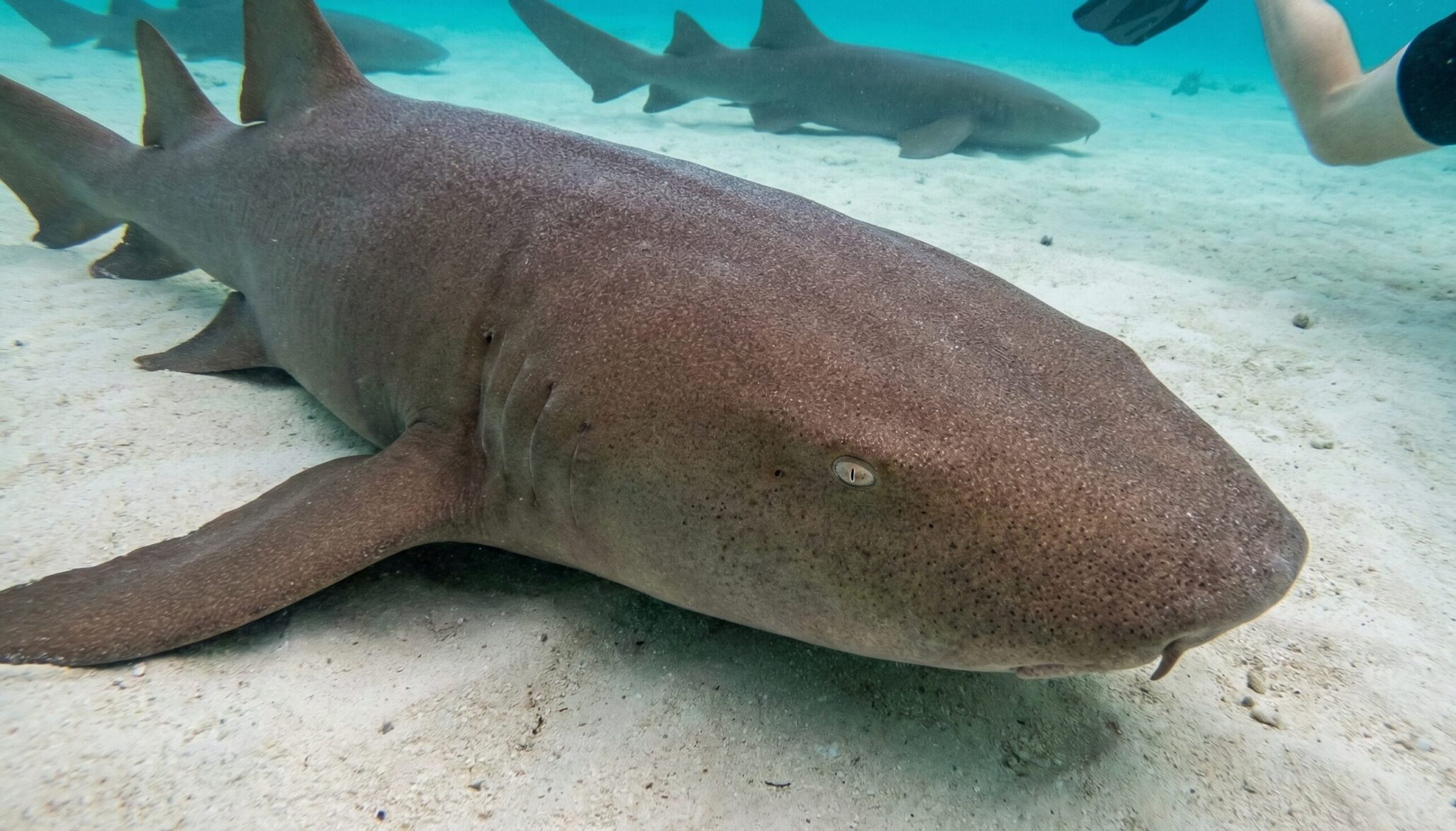
On a private boat, the whole vibe shifts. You’re not rushing to jump in to keep up with a group. You get to take your time. You can sit back on the deck, sip a drink, and wait for the “cattle boats” to finish their 20-minute slot and head back. When those big engines fade away, the water calms down, the silt clears, and the animals get a lot more relaxed. That’s when you jump in.
The Private Advantage with Nurse Sharks
Nurse sharks might be called the “puppies of the sea,” but they’re still wild animals deserving of respect. On a big group tour, the sharks get spooked by the loud splashing and frantic movements. They tend to stay deeper or swim off quickly. But on a private snorkeling trip, with just two or three people moving slowly and quietly, the sharks often become curious. They may glide right past you, just inches away, giving you an up-close view of their sandpaper-like skin and the way their gills pulse. It’s a much more intimate experience compared to the usual “drive-by” sightings.
Shark Ray Alley — Group vs. Private Dynamics
| Aspect | Group Tour Experience | Private Charter Experience |
|---|---|---|
| Noise Level | High (Shouting, splashing, whistles) | Low (Quiet observation) |
| Animal Behavior | Spooked / Fast movement | Calm / Curious / Slow glides |
| Safety | Crowded (Watch out for fins) | Spacious (Focus solely on the animals) |
| Interaction Time | Strictly timed (15-20 minutes) | As long as the sharks stay interested |
The Art of Reef Photography (Without the Crowds)
If you brought a GoPro, an underwater housing, or even just a waterproof phone pouch, you’ll want a private tour. Photography comes down to two things: light and composition. On a group tour, your shot is usually ruined by someone’s neon-orange life jacket or bright blue fins in the background. You spend the whole time trying to “crop out” other tourists.
On a private boat, you can work with your guide to frame the perfect shot:
- Framing the Rays: Southern Stingrays are incredibly photogenic as they “fly” over the sandy bottom. Your guide will help position you to get the perfect shot without distractions.
- Lighting: With your early start (remember the 8:00 AM rule?), you get that beautiful, angled morning light that creates “god rays” in the water—perfect for professional-looking photos.
- The “Selfie” with a Shark: Want a photo with a nurse shark in the background? Your guide can position the boat and help get the lighting just right. They know your photos are your memories, and they have the time to help you capture them perfectly.
For more on the creatures you’re photographing, our guide on marine life in Hol Chan will help you identify what’s swimming in your frame.
Understanding Southern Stingray Etiquette
While nurse sharks steal the spotlight, Southern Stingrays are the true stars at Shark Ray Alley. They’re sleek, elegant, and surprisingly social. On a private tour, your guide can teach you the “Stingray Shuffle” and show you how to interact with them safely. These rays will often swim right up to your boat, curious and calm, because there’s no noisy splashing to scare them off.
Pro Tip: Don’t touch them. They may seem friendly, but they’re still wild animals. Your guide will show you how to position yourself so the rays swim around you, giving you a full 360-degree view of their graceful movements. This level of intimacy is something you won’t get with a large group where it’s all about the hustle and bustle. It’s the difference between a “zoo” experience and a “wilderness” experience.
The Guide Makes the Difference — From Lifeguard to Naturalist
On a group tour, the guide plays the role of a lifeguard—keeping an eye on everyone, ensuring no one’s drifting too far from the boat, and counting heads before moving to the next stop. The goal is safety in numbers. There’s no room for personalized discovery or real learning. But on a private Hol Chan tour, it’s a whole different vibe. The guide isn’t just watching you. They’re out there with you, diving in, exploring.

Without a crowd to manage, your guide becomes a marine naturalist. I’ve had guides in Belize who can spot a moray eel’s head from twenty feet away, while steering the boat with one hand. In the water, they’re your eyes—pointing out the reef’s subtle relationships. Like the cleaning stations where tiny neon gobies pick parasites off a massive Nassau Grouper. Without a guide, you’d miss these micro-dramas—tiny wonders you might never notice swimming past them.
The Bespoke Safety Net
Your private guide adapts safety and effort levels to your needs.
- For the Nervous Swimmer: If deep water or strong currents make you uneasy, your guide stays close, offering a reassuring presence. I’ve seen guides pull a nervous swimmer along on a life ring, making sure they’re comfortable to just float and enjoy the view without stress. That peace of mind? Priceless.
- For the Expert Diver: If you’re a strong swimmer, they won’t hold you back. They’ll take you to the deeper, more exciting parts of the reef—where spotted eagle rays and larger sharks like to hang out. This is why people come back for private Hol Chan tours. It’s about trust, pace, and local expertise.
Is a Private Tour Mandatory for Families?
If you’ve got young kids, a private tour isn’t just a luxury—it’s essential. Kids are unpredictable. One minute they’re fascinated by a yellowtail snapper, the next, they’re cold, tired, or terrified by a nurse shark. On a group tour, you’re stuck. If your child has a meltdown, you risk ruining the trip for yourself and annoying everyone else on the boat. It’s not just a logistical nightmare—it’s a guilt trip too.
With a private boat? All that stress disappears.
- The Kid-Centric Schedule: If the kids want to play with their toys on the deck after 10 minutes, they can. If they’re obsessed with finding “Nemo” and want to hunt for clownfish for an hour, the captain will wait—no problem.
- Safety First: You get an extra pair of professional eyes just on your children. This gives parents the chance to actually enjoy the reef, instead of constantly scanning the water for kids’ snorkels. The entire adventure becomes a family affair.
- Comfort Breaks: With a private boat, there’s more space. You can bring the snacks your kids like, their favorite drinks, even their own playlist. It’s the difference between a cramped school bus and a cozy family SUV.
Family Dynamics — Group vs. Private
| Scenario | Group Boat Reality | Private Boat Reality |
|---|---|---|
| Child gets scared | Parent must stay on boat or manage child in crowd. | Captain can distract child or move to a calmer spot. |
| Bathroom/Snack needs | Wait for the scheduled stop. | Immediate access to your supplies. |
| Learning pace | Quick “glance and go” overview. | Guide answers 100 “Why?” questions from curious kids. |
| Group energy | Potentially rowdy strangers. | Quiet, safe, family-only environment. |
Education Over Sightseeing
On a private tour, the conversation flows nonstop. You learn about the Belize Barrier Reef—its status as a UNESCO World Heritage site, its unique conservation efforts, and why Hol Chan is considered one of the most successful marine reserves. Your guide explains things like coral bleaching, or how invasive lionfish are being managed to protect biodiversity. By the time you leave the boat, you don’t just have photos—you’ve got a deeper understanding of the ocean’s delicate balance. Before you go, make sure to check our what to expect guide for a heads-up on conditions.
Equipment and Comfort — Why the Details Matter
Let’s talk gear. On group tours, snorkeling equipment is often generic. Big operators buy in bulk—masks, snorkels, fins—used by hundreds of people and sanitized in a quick dunk of bleach. There’s nothing worse than a leaky mask or fins that give you blisters.

Private tours in 2026 offer better-quality gear. Because they manage fewer sets, you get higher-quality masks that actually seal to your face. But it’s not just about the gear—it’s the comfort of the boat. With a private charter, you have space to spread out. There’s a dedicated dry area for your camera gear or clothes, and a cooler with drinks—not someone else’s soggy sandwiches. It’s the difference between a cramped bus and a private car.
The “Pro” Gear Secret
If you’re a serious snorkeler, bring your own mask. A mask that fits well can reduce leaks by almost 70%. Rent the fins from the captain—they’re bulky, but your personal mask will give you the best experience. Check out our snorkeling checklist for more tips on what to bring.
The Cost — Breaking Down the Math for 2026
This is where most people get tripped up. A private tour costs $450 to $600 USD, while a group tour is around $65 to $85. But let’s break it down logically. The standard park fee is $15 per person, included in most private tour prices. But for a family of four, that $65–$85 group tour ends up costing $300 after tips and fees.
For just $150–$200 more—which is less than one dinner—you get the entire boat. You save about 90 minutes of “dock hopping,” you get a custom schedule, and you get the best guide on the reef. When you look at it that way, the private boat is a high-value upgrade. It’s an investment in your vacation time.
Private Hol Chan Snorkeling Tour – Market Analysis
Overview
Hol Chan Marine Reserve and Shark Ray Alley snorkeling tours operate primarily from Ambergris Caye (San Pedro) and Caye Caulker, Belize. The market is divided into three core formats: half-day shared tours, full-day shared tours, and private boat charters. The core snorkeling locations remain consistent; differentiation comes from duration, exclusivity, routing flexibility, and service level.
Half-Day Shared Tours (Group Format)
| Duration | Stops | Typical Price (USD per adult) | Group Size | Inclusions |
|---|---|---|---|---|
| 3–4 hours | Hol Chan Marine Reserve + Shark Ray Alley | $80–$115 | 10–20 guests | Snorkeling gear, guide, boat transport, marine reserve fees |
These tours focus strictly on the two primary sites. Time in water averages 40–60 minutes per stop. Schedule is fixed and departure times are standardized (typically morning and early afternoon).
Full-Day Shared Tours
| Duration | Stops | Typical Price (USD per adult) | Group Size | Inclusions |
|---|---|---|---|---|
| 6–8 hours | Hol Chan + Shark Ray Alley + Coral Gardens + additional reef sites | $110–$140 | 8–18 guests | Snorkeling gear, guide, reserve fees, lunch or snacks |
Full-day programs extend the route beyond the main reserve channel. Additional stops may include Coral Gardens, Caye Caulker sandbars, or manatee viewing areas depending on conditions. Lunch is commonly included either onboard or ashore.
Private Half-Day Charter
| Duration | Stops | Typical Price (USD per boat) | Capacity | Inclusions |
|---|---|---|---|---|
| 4–5 hours | Hol Chan + Shark Ray Alley (flexible timing) | $450–$650 | Up to 6–8 guests | Private captain & guide, snorkeling gear, flexible schedule |
Private half-day tours follow the same two-site route but allow longer water time and adjusted pacing. Ideal for families or photographers needing slower rotations.
Private Full-Day Charter
| Duration | Stops | Typical Price (USD per boat) | Capacity | Inclusions |
|---|---|---|---|---|
| 6–8 hours | Hol Chan + Shark Ray Alley + Coral Gardens + optional Caye Caulker stop | $650–$1,100+ | Up to 8–12 guests (boat dependent) | Private crew, customizable routing, snorkeling gear, lunch options |
Full-day private charters allow itinerary customization. Time at Shark Ray Alley can be extended or shifted to avoid peak traffic. Operators often include beverage service and lunch coordination.
Core Experience Differences
| Factor | Shared Tours | Private Tours |
|---|---|---|
| Boat Occupancy | Multiple unrelated guests | Exclusive to booking party |
| Schedule | Fixed departure & return | Flexible within duration window |
| Water Time | Structured rotations | Adjustable per group preference |
| Routing | Predefined stops | Customizable stops (weather permitting) |
| Cost Structure | Per person | Per boat |
Typical Inclusions Across Formats
- Snorkeling equipment (mask, snorkel, fins)
- Professional marine guide
- Boat transport from departure dock
- Hol Chan Marine Reserve entrance fees
- Life jackets and safety briefing
Operational Considerations
- Marine reserve entry quotas can affect timing.
- Weather and sea state influence site order.
- Peak traffic at Shark Ray Alley typically occurs late morning.
- Manatee sightings are seasonal and not guaranteed.
Pricing Summary (Market Range)
| Tour Format | Price Range | Best For |
|---|---|---|
| Half-Day Shared | $80–$115 per adult | Budget travelers |
| Full-Day Shared | $110–$140 per adult | Extended reef exposure |
| Private Half-Day | $450–$650 per boat | Families / small groups |
| Private Full-Day | $650–$1,100+ per boat | Custom routing & flexible pacing |
Across all categories, the primary differentiators are exclusivity, duration, and stop count—not the reef itself. Hol Chan and Shark Ray Alley remain constant; the experience depth depends on format selection.
Tipping Etiquette — Honoring Your Guide
Tipping for excellent service is traditional in Belize. Your private guide is doing more than just driving a boat; they’re your naturalist, photographer, and safety officer. For a half-day private tour, tip 15%–20%. If your guide goes above and beyond—like finding a seahorse or helping your nervous kid feel brave—feel free to tip more.
Pro Tip: Tip in cash (USD or BZD). While some shops accept cards, guides prefer cash so they can take it home immediately. If you have multiple crew members, tip the lead guide and mention it’s for the team, or tip them individually if you connected with both.
Final Thoughts: A Memory, Not Just a Tour
Maybe I’m biased, but I’ll never go on a group tour at Hol Chan again. It’s too fragile, too beautiful to be seen through a crowd. You owe it to yourself—and the reef—to experience it with respect and focus.
Whether you’re a couple on a romantic getaway or a family inspiring the next generation of ocean lovers, a private tour is the only way to go. It transforms a simple excursion into a profound experience. Before you book, clarify your goals with the captain. Ask about the “secret spots,” request an early start, and let go. Floating in crystal-clear water with only your breath and the sight of a six-foot ray beneath you—that’s why you came to Belize.
Don’t forget to check the what to expect guide so you’re ready for the conditions. Belize is a special place, and Hol Chan is its crown jewel. Don’t see it from the back of a crowd. See it through the eyes of a local, on your own time, on your own boat. Safe travels, and enjoy the sharks!
Frequently Asked Questions About Private Hol Chan Snorkeling
1. How much does a private tour to Hol Chan typically cost in 2026?
For a private charter from San Pedro, expect $450–$650 USD for a 4-hour trip. From Caye Caulker, it’s $550–$750 due to the longer travel time. Most quotes include park fees, gear, and refreshments. Always confirm at booking.
2. What is the best time to go snorkeling at Hol Chan?
The “Golden Window” is between 8:00 AM and 10:00 AM for better visibility and more active wildlife. The afternoon can also work, but mornings are generally calmer.
3. Can we see manatees on a private Hol Chan tour?
Yes, but it requires patience. Manatees are usually found in Zone B (seagrass beds). A private boat can drift quietly, increasing your chances of sighting them.
4. Is it safe to swim with the sharks at Shark Ray Alley?
Yes, Nurse Sharks are non-aggressive and used to human presence. Your guide will give you instructions on respecting their space—never touch or feed them.
5. What should I bring on a private snorkeling boat?
We recommend:
- Reef-safe sunscreen
- Polarized sunglasses
- Long-sleeve rash guard
- Cash (USD or BZD)
- Reusable water bottle
6. Do I need to be a strong swimmer to enjoy Hol Chan?
Not at all. Your guide can assist with life vests or pull you along on a ring. Strong currents are common, but with a dedicated guide, it’s safe for beginners.
7. How long is the boat ride to the reserve?
From San Pedro, it’s a quick 10–15 minutes. From Caye Caulker, expect 30–45 minutes. On a private boat, this is time to relax and spot dolphins.
8. Is the Marine Park fee included in the price?
The $15 USD per person fee is usually included, but double-check with your operator to ensure there are no surprises.
Hol Chan Digital Fish ID
John Keaton's Challenge: Don't just swim, actually LOOK. Can you find them all?
The Heavy Hitters

Nurse Shark
COMMON"They look like big, lazy puppies. Just don't touch their skin—it's literal sandpaper."

Spotted Eagle Ray
RARE"Absolute magic. If you see one cruising the deep channel, you've won the day."

Southern Stingray
COMMON"Velvet blankets of the sea. They'll brush your legs in the Alley. Don't panic."
Grumpy Neighbors

Green Moray Eel
MODERATE"Look in the crevices. They aren't snapping at you; they're just breathing. Mostly."

Great Barracuda
COMMON"Paranoid silver needles. They'll watch you from under the boat. Just keep your jewelry tucked in."

Spiny Lobster
MODERATE"Antennae sticking out of a hole? That's lunch... if we weren't in a protected park."
Reef Beauties

Blue Tang
COMMON"Dory. They move in big blue waves. Beautiful, but they have a scalpel on their tail."

Stoplight Parrotfish
COMMON"If you hear crunching underwater, it's these guys eating the reef and making sand."

French Angelfish
COMMON"Almost always in pairs. They mate for life. Romantic, for a fish."

Queen Triggerfish
RARE"Pound for pound the most colorful thing in the water. Weird eyes, though."

Sergeant Major
COMMON"Striped little beggars. They think every snorkeler is a snack dispenser."
The Legends

Manatee
LEGENDARY"Sea potatoes. They're shy, so if you splash like a maniac, they're gone."

Green Sea Turtle
MODERATE"Look in the grass. Watching them come up for air is the best 3 seconds of any tour."

Spotted Drum
RARE"Punk rockers of the reef. Tiny, but that dorsal fin is insane. Look under ledges."

Hawksbill Turtle
RARE"Pointy beak, beautiful shell. Much rarer than the Greens. Respect them."